

YouTube has introduced an updated approach to how generative AI (GenAI) content is disclosed and managed on the platform. Aimed at increasing transparency for viewers while preserving creator control, the policy updates clarify exactly what requires labeling, where those labels will appear, and how the changes affect video performance.
A Creator-Led Disclosure Model
The foundation of the update rests on creator self-disclosure. When uploading new content in YouTube Studio, creators will encounter an “AI use” survey. This allows individuals to declare whether their video contains altered or synthetic realistic media.
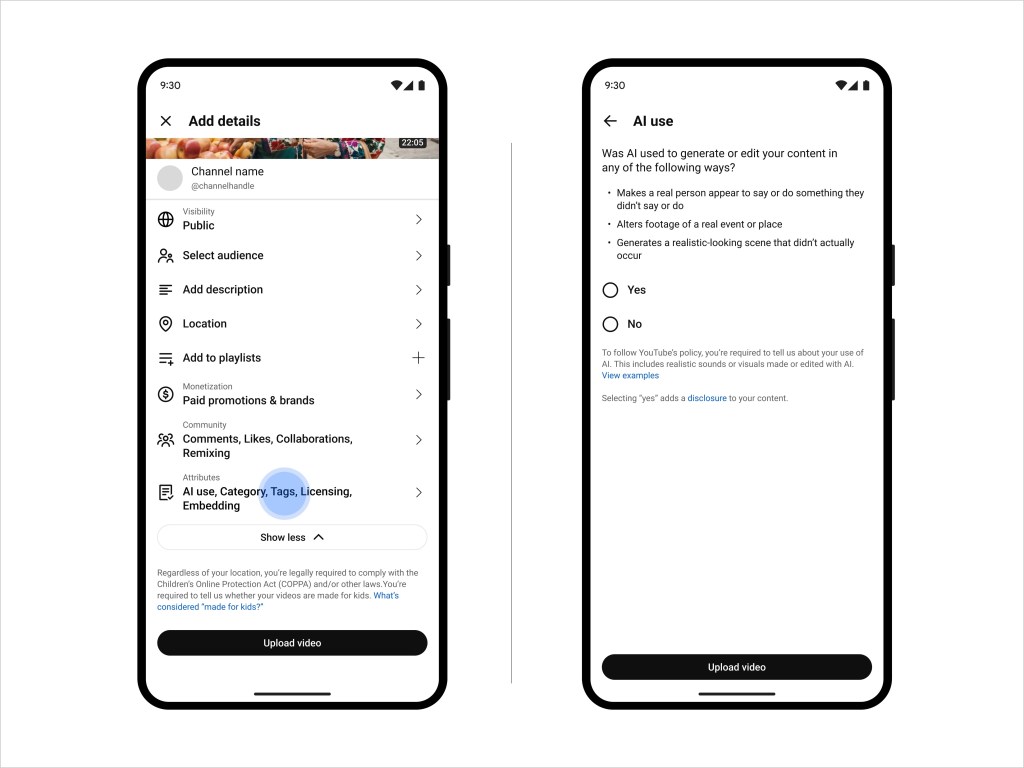
To maintain platform trust, YouTube will implement automated detection systems to apply labels on behalf of creators who fail to disclose realistic AI usage. Creators can monitor these designations through the Content tab in YouTube Studio. If an automated label is applied incorrectly, creators can manually update the survey in the “Attributes” section of the video settings to rectify the error.
What Requires Disclosure?

YouTube has established clear boundaries regarding what constitutes a necessary disclosure. Labeling is strictly mandated for photorealistic content that has been generated or meaningfully altered. This encompasses:
- Making a real person appear to say or do something they did not.
- Altering authentic footage of a real place or event.
- Generating a highly realistic scene that never occurred.
Conversely, creators do not need to disclose minor aesthetic edits, production assistance, or non-realistic content. Exemptions include beauty filters, color corrections, AI-generated outlines or scripts, and stylized animations.
Note that labels applied due to the use of YouTube’s internal AI tools (such as Veo or Dream Screen), verified C2PA metadata, or manual Trust and Safety reviews cannot be removed by the creator.
Visibility and Placement Changes
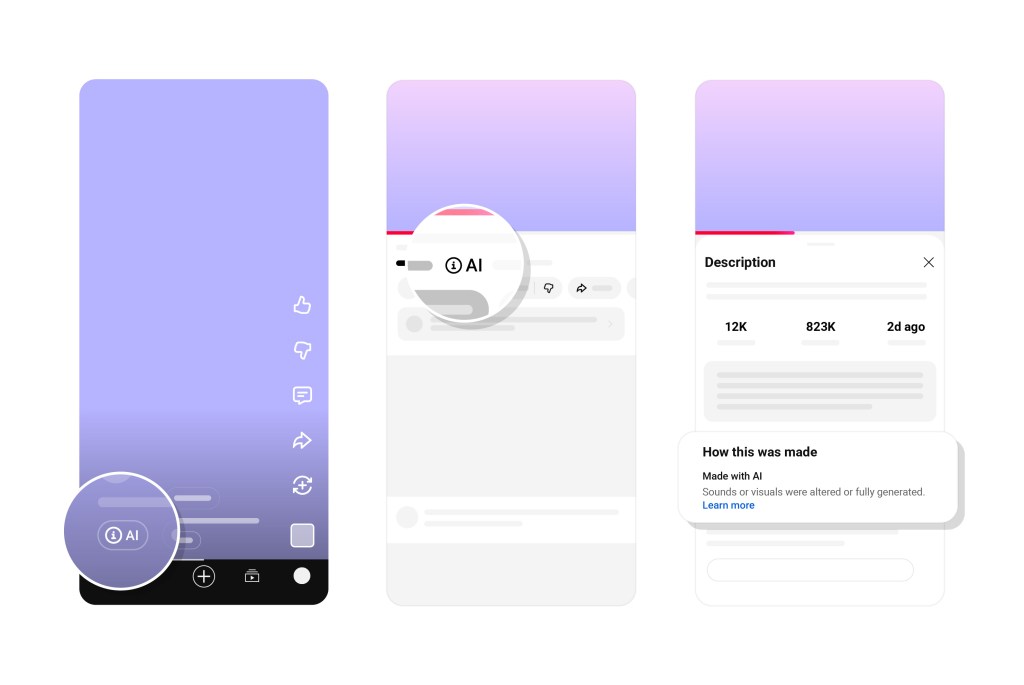
Beginning May 2026, AI disclosures will shift to more prominent interfaces to give viewers instant context:
- YouTube Shorts: The disclosure will appear as a direct text overlay on the video itself.
- Long-form Videos: The label will be positioned directly underneath the video player, above the expanded description section.
Algorithm and Monetization Impact
A primary concern for creators is whether disclosure affects video distribution. YouTube explicitly confirmed that applying an AI label does not negatively impact a video’s recommendation algorithm or its eligibility for monetization. The search and discovery algorithm evaluates videos independently based on audience signals, such as watch time, retention, and viewer satisfaction.
However, failing to disclose realistic AI modifications carries risks. Deceiving viewers with realistic synthetic media can cause harm, and creators who consistently neglect to provide these disclosures may face platform penalties.
For a step-by-step tutorial on navigating the updated upload flow, review the official documentation: https://support.google.com/youtube/thread/424874071


Leave a Reply